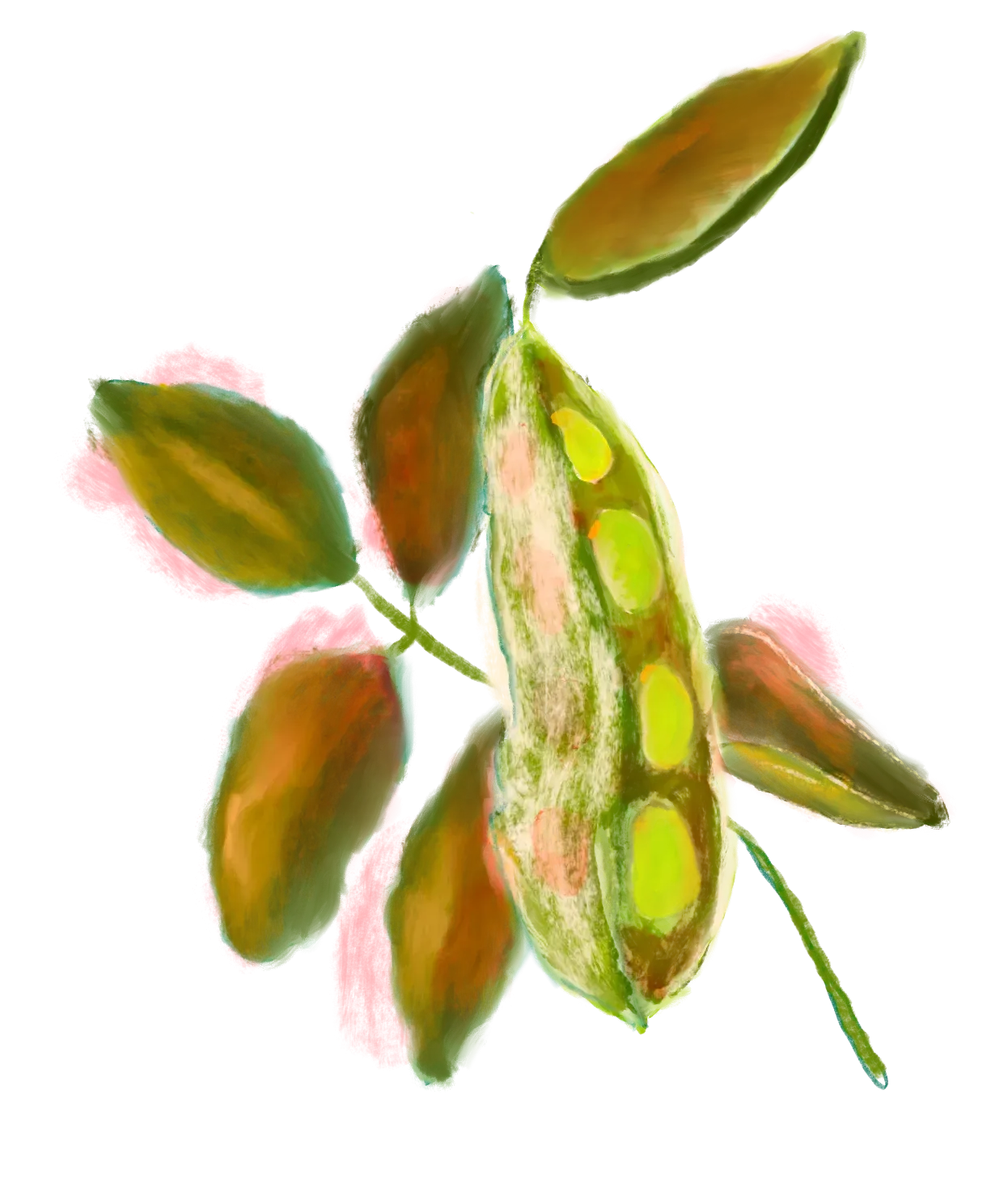
cover image by Mary Martin; USFWShairy vetch - aversatile legumephoto from the USDA
Hairy Vetch Quick Facts:
Hairy Vetch | Vicia villosa | Legume
Optimal Sowing: Shoulder seasons; favoring autumn
Ideal Germination Temp: 60°F
Max Height: Up to 12 feet when vine-supported; typically 3 feet as a cover crop.
Germination Time: 14 Days
Cold Hardiness: to zone 4; zone 3 with snow insulation
Bloom Time: May-August (Northern Hemisphere)
(advance cover crops, sustainable agriculture research and education, USDA NRCS)
Within this comprehensive guide, discover the multifaceted roles of hairy vetch:
- fix nitrogen in the soil for next crop to access
- build soil health
- sequester carbon
- prevent disease issues
- reduce pest pressure
- smother weeds
- attract pollinators
Continue on to understand why hairy vetch stands out as a premier cover crop in the world of regenerative gardening.
The Role of Cover Crops in Agriculture:
→ Cover Crop Definition: A crop that adds benefits to the soil. Soil with active crops is more protected than bare soil. Growing crops benefits the environment, since they sequester carbon with photosynthesis. Cover crops also benefit the health of the soil and can provide nutrients that the next crop can access.Cover crops offer so much value to the environment and the garden
Let’s first look at why cover crops are important. Then, we’ll dive into the specifics of hairy vetch.
Cover crops are a core component of regenerative gardening. The practice of planting cover crops was popularized due to the work and advocacy of George Washington Carver.
Cover crops offer carbon storage and benefit soil health. Both of these results are the main goals of regenerative agriculture.
In contrast, bare soil releases carbon and is at-risk for erosion and nutrient loss.
Cover crops ensure that carbon sequestration continues during the winter months.
Cover crops in general offer the following additional benefits to your garden:
- reduce soil erosion
- improve water retention
- add organic matter to soil
- can be used as a mulch
- reduce weed pressure
- add nutrients to the soil that are available for the next crop
- attract beneficial insects through habitat and food source
→ Important Note: Kill back cover crops in a sustainable way to keep your garden regenerative. Do not use herbicides to terminate your cover crops.Instead, cut back the crop and leave the greenery on the soil. The residue acts as a mulch for the next crop.You can also terminate a cover crop with a fence post like this. Alternatively, trim it back to the soil with some clippers or scissors.
The Science Behind Hairy Vetch:
Now that you understand the benefits of cover crops, let’s look at the specifics of hairy vetch.
The scientific name for hairy vetch is Vicia villosa.
Vicia is the botanical Latin term for the Vetch genus.
Villosa means hairy in Latin.
As a member of the legume family, hairy vetch forms a symbiotic alliance with soil microbes. This collaboration fosters the transformation of atmospheric nitrogen into a form that nourishes the soil and future crops (USDA NRCS).
What are the optimal growing conditions for hairy vetch?
Hairy vetch likes to be grown in the shoulder seasons, and its typically sown in the fall.
Ideally, temperatures will still reach 60 degrees during this time for optimal germination.
Once germination occurs, hairy vetch is very cold hardy. Without any addtional support, it will survive through zone 4 winters. It can survive under snow cover in zone 3, too (SARE).
What does hairy vetch look like?Beautiful patch of purple hairy vetch
Hairy vetch has small oval leaves that are opposite each other, with a tiny point at the end. Hairy vetch has beautiful purple flowers if it blooms. They magnet for bees and other pollinators.
Hairy vetch is vining, and like peas has thin curling tendrils that help it to climb in height.
According to Sustainable Agriculture Research and Education, hairy vetch can grow up to 12 feet tall! This is only if its able to climb up tall grasses, however.
If that feels like an overwhelming height, don’t worry. When grown on its own, this cover crop usually maxes out at 3 feet tall.
When does hairy vetch bloom?
Usually the flowers come on between May-August in the Northern Hemisphere (USDA NRCS).
When to cut back a hairy vetch cover crop?
Early in the bloom stage is the best time to cut back your hairy vetch cover crop, according to the Marion County Soil and Water Conservation District. This provides a food source for insects, but also reduces grow-back in the cover crop.
How to sow and maintain hairy vetch
If you get the timing right and have regular rain from autumn through spring, hairy vetch will be relatively easy to maintain.
AutumnIn my greenhouse, my cover crop of hairy vetch freshly germinated
The toughest thing might be sowing hairy vetch when daytime temperatures will reach 60 degrees F. That's the optimal germination temperature. You may be able to place a row cover over areas of your garden to help achieve this warmth level.
For best results, make sure that your soil is free of weeds before broadcasting the vetch seed.
You'll want to make sure that the soil stays moist before germination. Then, keep the crop watered regularly as it gets established.
Moderate temperatures in autumn let hairy vetch put on a few inches of quick growth.
Winter
In the wintertime, the plant goes dormant. If you do not get rain in the winter, you'll need to water your cover crop around once a week or so.
Don't worry about cold weather or snow for the most part. Hairy vetch will survive winters in zone 4 with no cover at all. In zone 3, snow cover is needed to act as insulation for the crop's survival.Photo CC0 by AnRo0002; hairy vetch flowers
Spring
Warm weather and more daylight provide vetch with the energy for some intense rapid growth. This is when the vetch will form a thick mat of green material to block out weed growth.
Depending on your sowing date and spring weather, hairy vetch can bloom as early as May. For optimal mulch material and nitrogen fixation, cut back the crop as the flowers are maturing.
This will also help your first cut-back of the crop to be successful and prevent regrowth.
Let the plant residue remain in place to cover the soil as much as possible. If you're planting seedlings into this area, simply create a small hole in the vetch residue. Plant the seedling as normal, and leave an inch or two of exposed soil around it until it gets more established.
If you are sowing seeds directly into the soil, move the vetch mulch aside until plants are established. Then, cover any bare soil with the vetch material.
Hairy Vetch’s Many BenefitsThe numerous benefits of hairy vetch cover cropping
1. Carbon Sequestration
All plants sequester carbon as part of photosynthesis. This is a major reason why regenerative agriculture emphasizes planting cover crops. Cover crops continue the process of photosynthesis during the off season. Otherwise,the soil would remain unplanted and no photosynthesis would occur.
Obviously soil carbon storage benefits the environment.
However, there’s another motivation for gardeners to encourage this natural process.
According to the University of Nebraska-Lincoln, high carbon levels increase soil health. The added carbon helps soil to hold water, which is helpful during times of drought.
Carbon also is a food source for beneficial microbes, which in turn support plants.
The key to maximize the carbon storage potential of any crop is to let the roots remain in place. When the crop is done, cut back the plant and let the green material act as a mulch or add it to the compost bin.
2. Nitrogen Fixation
Hairy Vetch has an incredible benefit of adding nitrogen to the soil. PennState Extension reveals that hairy vetch can gift an impressive 100 to 160 pounds of nitrogen per acre to the earth.
To put it in perspective, this is akin to applying a substantial 1,200 pounds of an 8-0-0 nitrogen fertilizer!
How does hairy vetch fix nitrogen in the first place?
Put simply, nitrogen fixation is possible because of a relationship between legumes and soil microbes.
According to Dr. Christopher S. Baird, bacteria and fungi are able to break atmospheric nitrogen down into a usable form for the plants.
In return, the plants offer carbon to the microbes, which is their food source.
In legumes, the process of nitrogen fixation leaves nodules on the roots of the plant. This is where the nitrogen is stored. We want to leave hairy vetch roots in the ground is because the nitrogen nodules will break down in the soil for other plants to use.
Advance Cover Crops reminds gardeners that half of the nitrogen in hairy vetch is in the green material of the plant. It’s important to keep the plant as a mulch on the next crop for full nitrogen potential.
Go Deeper: Learn more about how Regenerative Agriculture + No-Till Gardens enhance Nitrogen Fixation
3. Soil Health and Structure
Hairy vetch improves soil aeration and porosity
According to the USDA, hairy vetch can penetrate up to 3 feet into the ground. When these roots decompose in the soil, they will add organic matter in deeper layers. This helps to improve both clay and sandy soils.
Hairy vetch reduces soil erosion
The USDA also notes that the sprawling growth habit of hairy vetch can reduce soil erosion. This growth habit also prevents nutrient runoff.
Hairy vetch adds beneficial fungi to the soil for improved soil health
A study published in the American Journal of Alternative Agriculture shares another benefit of hairy vetch. In tests with hairy vetch in no-till low-input systems, the soil contained more vesicular-arbuscular mycorrhizal fungi.
This is the fungi that not only benefits plant and soil health, but also sequesters carbon. This was in comparison to hairy vetch with tillage and conventional growth, and in comparison to a fallow field.
Hairy vetch cover crop can reduce winter flooding situations
Do you live in an area where the soil cannot hold heavy rainfall, so water pools on top of the surface for days?
Sustainable Agriculture Research and Education recommends hairy vetch, or a mix of hairy vetch and oats, for situations like this.
Hairy vetch can break up tough soil surfaces in sandy and loamy soil types. This in turn allows for more water to absorb into the soil instead of sitting on top.
It’s also a choice crop for managing water runoff and allows water to be absorbed and stored in the soil long term.
4.Pest Control with Mulch Cover + Beneficial Insects
Hairy Vetch and the Colorado Potato Beetle
Mulch can help to control pests by creating a barrier that insects and other pests find difficult to cross. It can also attract beneficial insects that prey on garden pests.
The USDA found that a mulch of hairy vetch around tomato plants reduced populations of the Colorado Potato Beetle. This was in comparison to plastic row covers.
Hairy Vetch attracts Beneficial Insects
Hairy vetch attracts a plethora of beneficial insects into your garden:
- Ladybugs (famous for eating aphids)
- bigeyed bugs (feed on caterpillars, aphids, mites, and whiteflies)
- minute pirate bugs (eat thrips)
If you’ve had a problem with aphids, thrips, whiteflies, or mites, plant hairy vetch as a cover crop. Then you’ll attract natural pest control to your garden.
(Sustainable Agriculture Research and Education + UC IPM)
5. Disease Reduction with Hairy Vetch
Fusarium Wilt
Southern Cover Crop Conference notes that a hairy vetch cover crop can prevent fusarium wilt in watermelon.
Powdery Mildew
This study from the Rodale Institute shows that a cover crop of Hairy Vetch can reduce the intensity of powdery mildew in future crops.
Blight
Hairy vetch is shown to prevent blight in tomatoes, especially when it is crimped back and planted into so that it acts as a mulch.
In fact, the USDA found that tomato plants improved yields by 25% when they were planted into hairy vetch mulch.
6. Reduce Weed Pressure with Hairy Vetch Cover Crop
Control spring weeds
When hairy vetch is planted in the late fall, it will start to fully cover the soil in a thick mat during the spring. This prevents weeds from germinating and becoming an issue during the planting season.
If you would also like to prevent weed growth in the fall, Marion County Soil + Water recommend planting it as early in the fall as possible for maximum growth before it goes dormant in the winter.
7. Creates Mulch to Protect Soil
We’ve already talked about how hairy vetch grows into a living mulch that prevents weed growth.
We also saw that hairy vetch mulch can prevent disease in tomatoes and actually increase yields.
Hairy vetch mulch has more to offer!
While the nitrogen nodules are released in the soil, the above-ground parts of the plant contain nitrogen as well, which decomposes into the soil as the mulch breaks down.
Like any other mulch, it also supports water retention in the soil. This means the crop will need less watering over all, and the water applied will have a lower evaporation rate.
Mulch also prevents soil and nutrient loss. Less carbon is lost in the soil when it remains covered.
Comparative Advantages Over Other Cover CropsHairy vetch offers consistent results to improve soil health and crop yield
Before we look at how hairy vetch stacks up against other cover crops, I want to start by saying one thing: Any cover crop is better than no cover crop. Compared with bare soil, anything that you can plant in your garden during the winter is a win.
With that out of the way, let's look at how other crops compare with hairy vetch.
The closest comparison is when we look at other legumes. Most legumes are known for fixing nitrogen and adding biomass. Legumes also provide blooms for pollinators to enjoy. They grow quickly to suppress weeds, and their root systems reduce erosion.
The main difference between hairy vetch and other legumes is the way that hairy vetch has been shown to prevent disease, such as blight, wilt, and powdery mildew.
Additionally, hairy vetch is quite hardy down to low temperatures. Some legumes winter kill, which could be an advantage depending on your goals. Other legumes like buckwheat are best sown in the summertime.
Next, when we look at rye, wheat, and other grasses, we see that the biggest distinction is the nitrogen fixing capabilities. While grasses add nitrogen, the levels available are small in comparison to what hairy vetch has to offer. However, this group of cover crops is a great choice if you're looking to make your own mulch. Grasses create a mulch that is usually very high volume and long lasting.
Brassicas can actually be heavy feeders and may need added nitrogen fertilizer to thrive. Brassica cover crops may be a great option if you have nematode pest issues in your soil, however.
Disadvantages to Hairy VetchSome reasons not to plant hairy vetch as your cover crop
Height
Advance Cover Crops notes that Hairy Vetch can grow quite tall. This can be a good thing for mulch cover. But it may make it difficult to terminate the crop with machinery. In most gardens under an acre, cutting back hairy vetch by hand or with a fence post crimper won’t cause much issue.
Persistence
Advance Cover Crops also shares that the seed of Hairy Vetch can persist in the soil for a few years. In fact, about 30% of Hairy Vetch seeds won’t germinate and will “hold” in the soil to germinate later on.
This could be seen as a benefit. The hairy vetch can be a companion plant to your crops. It can continue making mulch, or it might grow just in time for next year’s cover crop.
But if you’re a market gardener or need a “weed”-free garden for income, this might be problematic.
Please maintain your hairy vetch crop and do not allow it to spread or leave uncollected seed. It can become invasive in some areas.
Potential for Nematodes
Sustainable Agriculture Research and Education mentions that nematodes can sometimes increase in hairy vetch growth. This includes soybean cyst nematode and root-knot nematode. They recommend not planting this cover crop if your soil has these pests already.
It might be helpful to mix hairy vetch with cover crops that naturally reduce nematode populations. You might want to grow Tangerine French Marigold in that area if you notice root-knot nematode damage.
Alabama State University also notes that solarization of the area (subjecting it to high heat in the summer under a clear plastic tarp) also kills root-knot nematodes. They recommend a length of 4-6 weeks in the summer.
Conclusion:
If your goal is a sustainable and regenerative garden, then sowing a cover crop is a must in the autumn.
It's true that there area some instances where vetch would not be a good choice. For example, if you have nematode issues or already have high nitrogen levels in your soil.
Otherwise, hairy vetch is a great choice. If you're not sure what cover crop to plant, this one has so many benefits that you're bound to see a great result in your garden.