
This article contains affiliate links, which means we might earn a small commission if you purchase one of these products. Don't worry, though - there's nocheap Amazon products here! We prioritize small independent brands that we trust, who offer high-quality sustainable goods.
“If ever I needed
a demonstration
on how to lead
with the heart,
it’s you, coneflower,
that teaches me
how to shine forth
from the center,
how to grow
from the muck.
I am ready to live
the way you do,
wild and abundant,
needing dark and
cold to germinate, but
living to gather light.”
Several summers ago, I was standing in my garden, frustrated by some stubborn coneflower seeds that refused to sprout. Determined to uncover the secret to their germination, I embarked on a mission. Over the past couple of years, I’ve grown deeply fascinated by these native perennials and their journey from seed to bloom.
Purple coneflower is a star in pollinator gardens, attracting bees and butterflies to your backyard. As the blooms transform into seeds, birds benefit from their sustenance, making it a win-win for wildlife.
For humans, purple coneflowers add beauty to flower bouquets, lend themselves well to dried arrangements, and, of course, have uses in herbal medicine.
In this post, I'll share my own experience with the various sowing techniques I tried, the nuances of cold stratification, and the different growth stages I observed. From soil prep to setting up a watering schedule and understanding sunlight requirements, I’ve got some interesting insights to share. Let's no-dig into it!
Major Coneflower Species:
- Echinacea purpurea (Purple Coneflower)
- Echinacea pallida (Pale Purple Coneflower)
- Echinacea angustifolia (Narrow-leaved Coneflower)
More Localized Coneflower Species:
- Echinacea paradoxa (Bush’s Coneflower - Ozarks)
- Echinacea tennesseensis (Tennessee Coneflower)
- Echinacea simulata (Ozark Coneflower)
👉 Here are two of the most important things to know about growing purple coneflower/echinacea:
1. How to Germinate Purple Coneflower (Echinacea) Seeds
Problem: Coneflower seeds not germinating?
Solution: Cold stratification is required.
How-To: Place seeds in a moist paper towel inside a plastic bag and refrigerate for 4-6 weeks. Ensure the paper towel is damp but not soaking. Check weekly to maintain moisture.
Why: This process breaks seed dormancy and significantly improves germination rates.
2. Why Your Echinacea Plants Aren't Blooming
Issue: Echinacea plants not blooming?
Explanation: Echinacea plants typically take two growing seasons to bloom.
First Year: The plant focuses on growing basal leaves and developing its root system.
Second Year: Mid-summer marks the first bloom.
Note: It's normal for the plant to not produce flowers in the first year. Patience is key.
Growing Purple Coneflower from Seed: A Step-by-Step Guide
Step 1: Preparing the Seeds
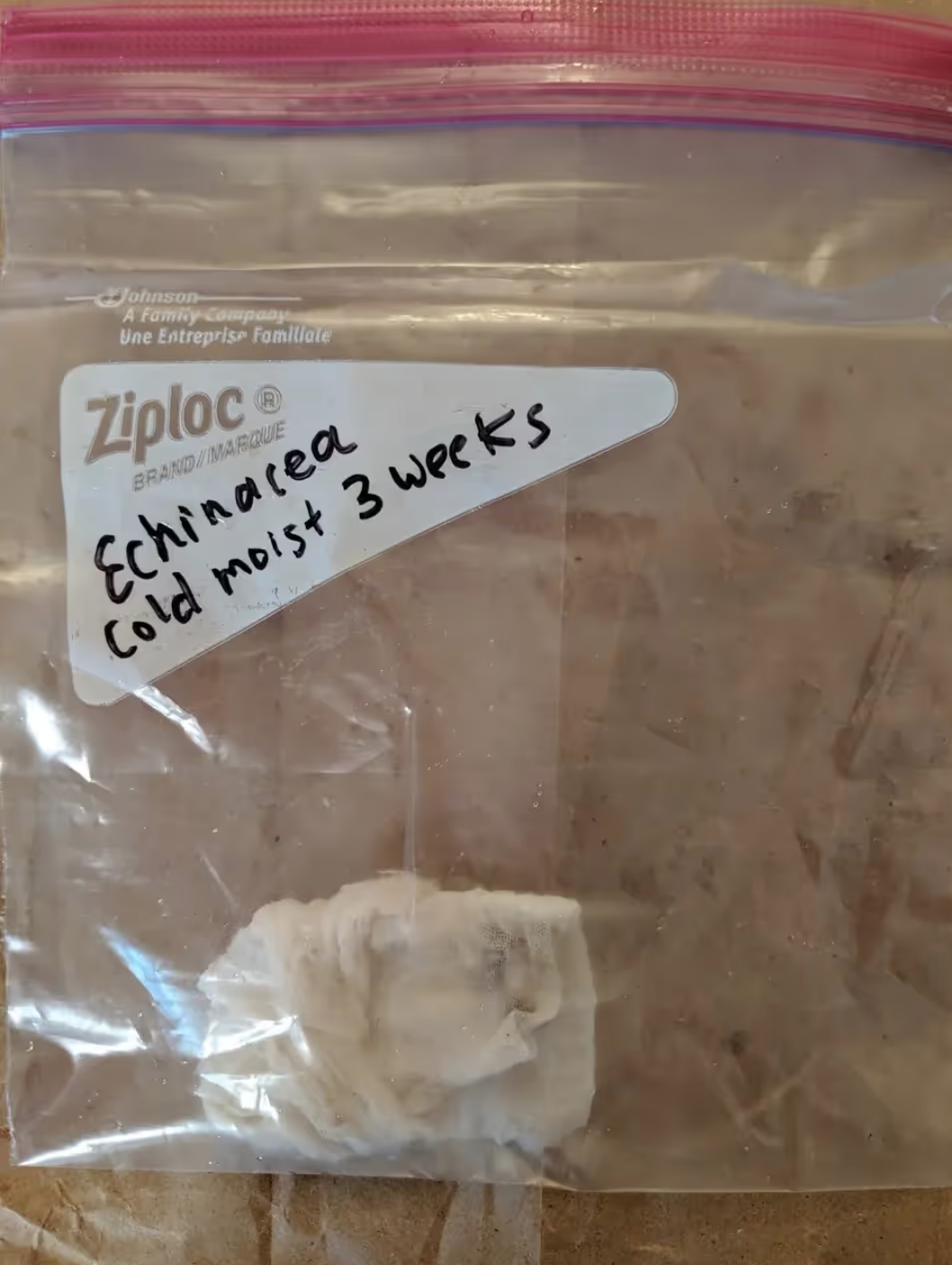
Cold stratify coneflower seeds by placing them in a moist paper towel inside a plastic bag and refrigerate for 3-4 weeks. This process helps break seed dormancy and improves germination rates.
In an experiment, Echinacea purpurea seeds were sown with a range of different treatments. It was a 21-day cold stratification that resulted in the highest germination rate of approximately 98%, with the quickest germination time.
Step 2: Planting the Seeds Indoors
After cold stratification, plant the seeds in seed trays filled with a well-draining seed starting mix. Richo Cech, the herbalist who runs Strictly Medicinal Seeds, notes that echinacea seeds should be covered with around 1/4" of soil, as they do not need light to germinate. Keep the soil moist but not waterlogged, and place the trays under grow lights.
Step 3: Germination and Early Growth
Coneflower seeds usually take about 10-20 days to germinate. Monitor the trays and ensure they receive sufficient light and moisture for optimal growth.
Step 4: Transplanting Seedlings Outdoors
Once the seedlings have a few sets of true leaves and the risk of frost has passed, transplant them outdoors into a sunny location with well-draining soil.
Step 5: First Year Growth
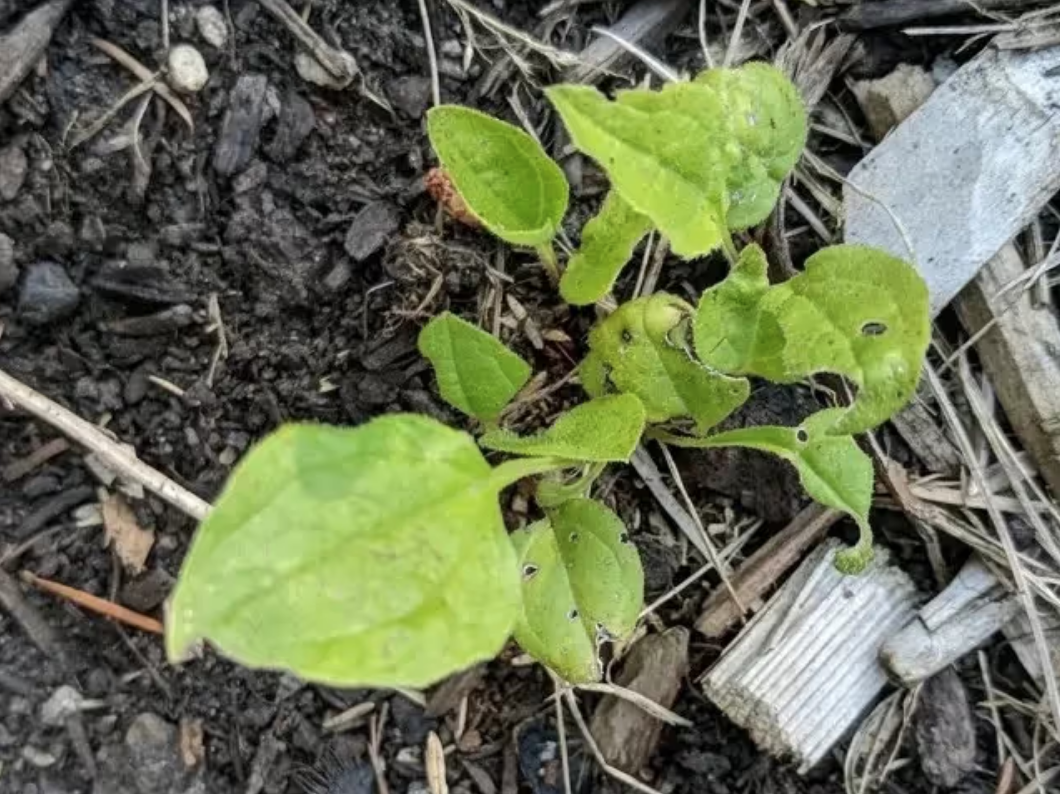
In the first year, coneflowers focus on developing their root system and basal leaves. This stage is crucial for establishing a strong foundation for future growth.
Step 6: Second Year Growth and Bloom

In the second year, coneflowers will begin to produce flower stalks and bloom. Expect vibrant purple flowers to start appearing in mid-summer.
Step 8: Enjoying the Blooms and Supporting Pollinators

Enjoy the beautiful blooms and watch as they attract pollinators like bees and butterflies. The seed heads will also provide food for birds in the fall and winter.
Personal Experiences with Purple Coneflower:
In the beginning of my gardening journey, I tried growing echinacea a few times. Unfortunately, they didn’t germinate—this was before I realized which plants need cold stratification.
After some in-depth research on the science behind cold treatment, I started the process of placing the seeds in my fridge in February. It was on the brink of snowfall outside, and that was the exact condition that I wanted to replicate in my refrigerator, but in a more tended-to way.
While it was in the depths of winter, I was daydreaming about the warm summer day—a year and a half from that point—when these echinacea seeds would bloom.
There’s a lot of anticipation when planting echinacea, but it’s totally worth it. After three weeks in the fridge, I carefully planted the seeds and watched them closely for any signs of growth. In a couple of weeks, those little green shoots emerged—a victory for me, since this was my third season trying to grow them!
Once the last frost had passed in the garden, I eagerly transplanted the young seedlings into their new outdoor home.
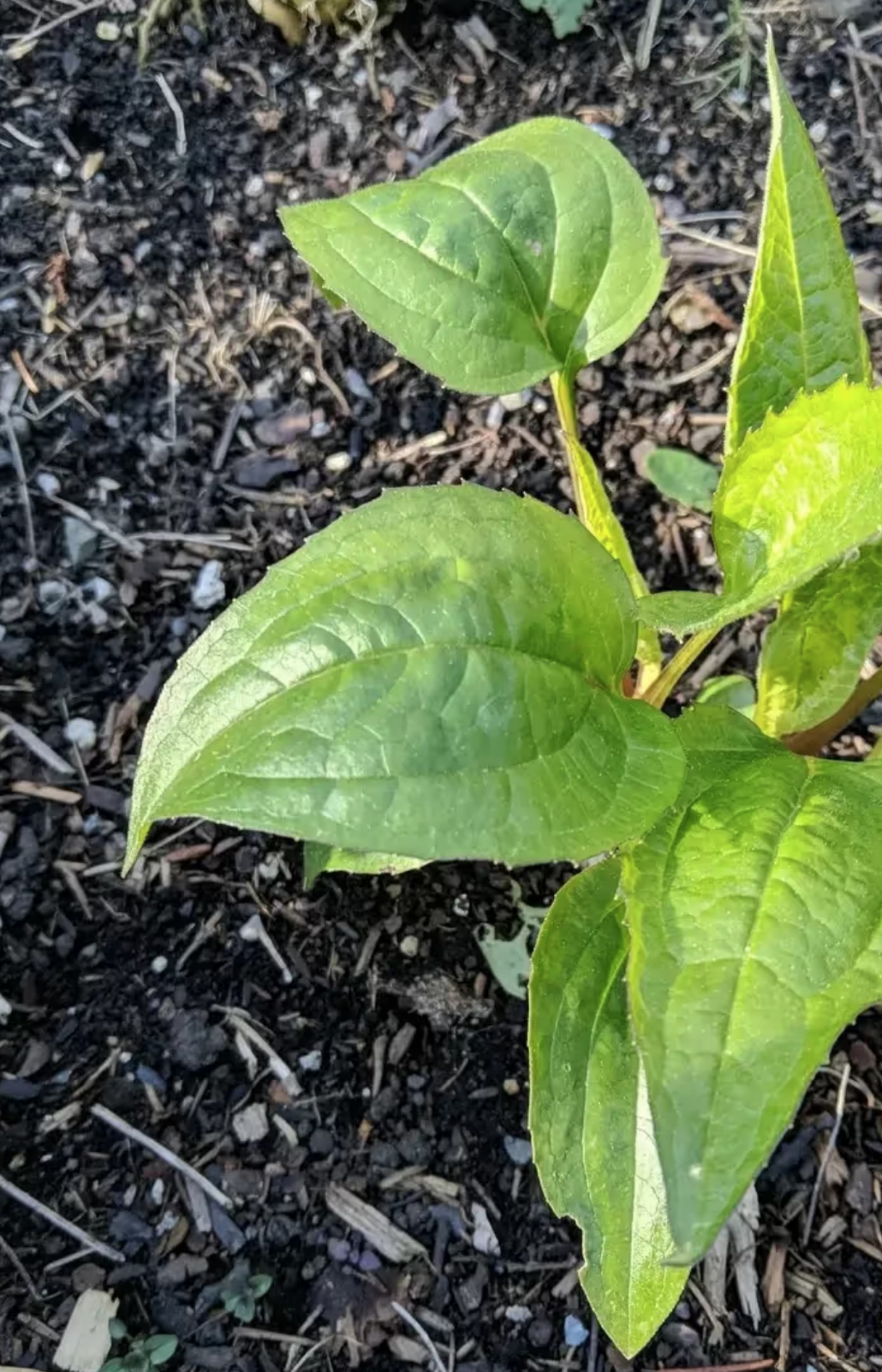
That first year was all about patience. I watched as the coneflowers focused their energy on growing their root systems and basal leaves. It's the silent work sometimes that really pays off later.
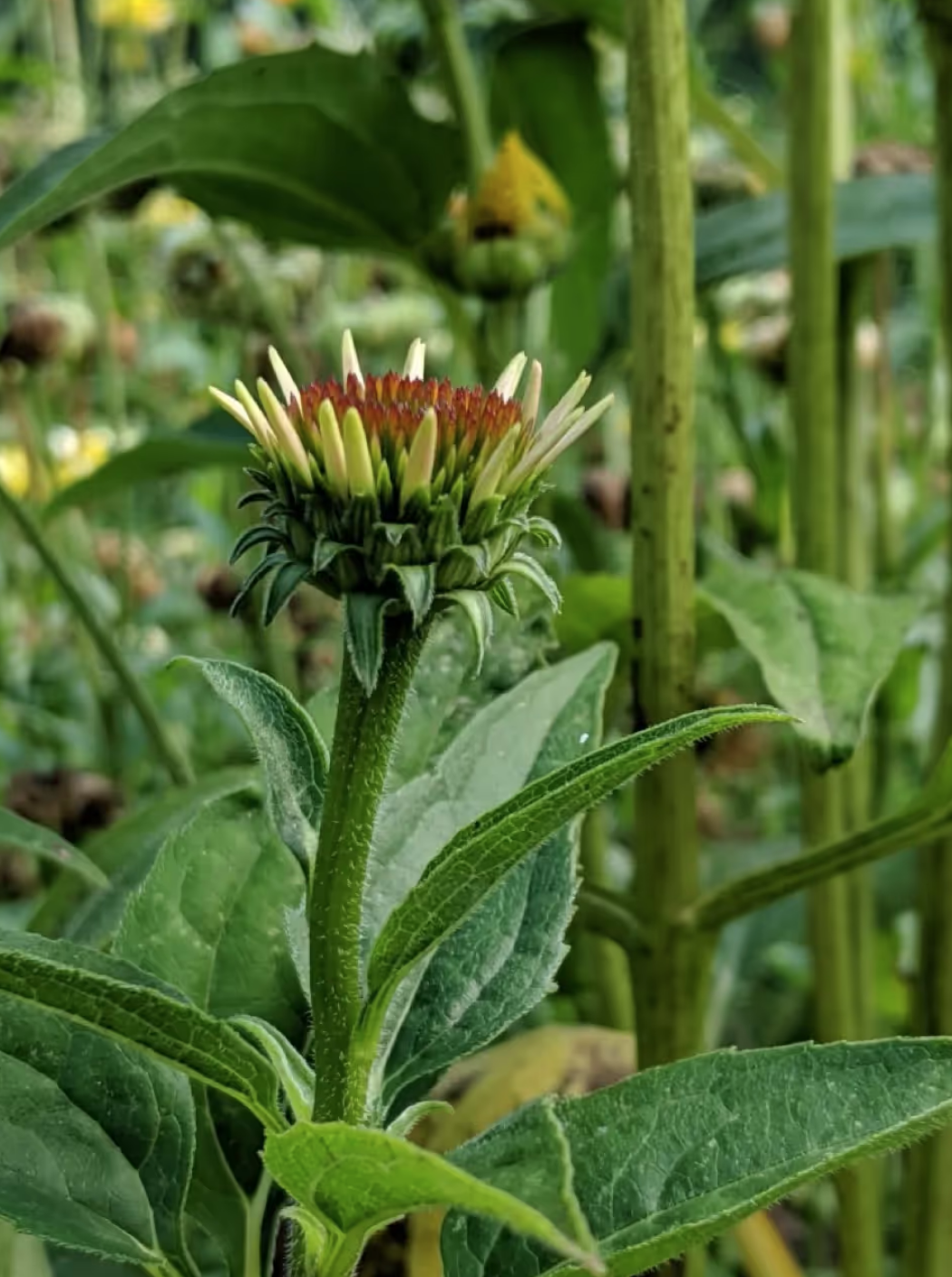
Then, the second year rolled around, and I continued to witness the evolution of my echinacea plants. Finally, a long stem shot up out of the ground, and buds started to form. In late July, the sight of the first vibrant blooms—starting with thin petals that eventually filled out—was the icing on the cake to this wildflower growing process.
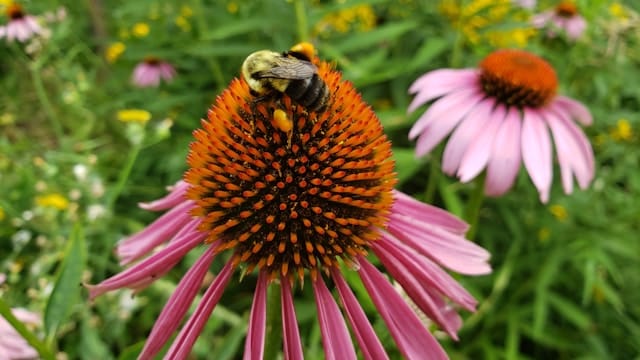
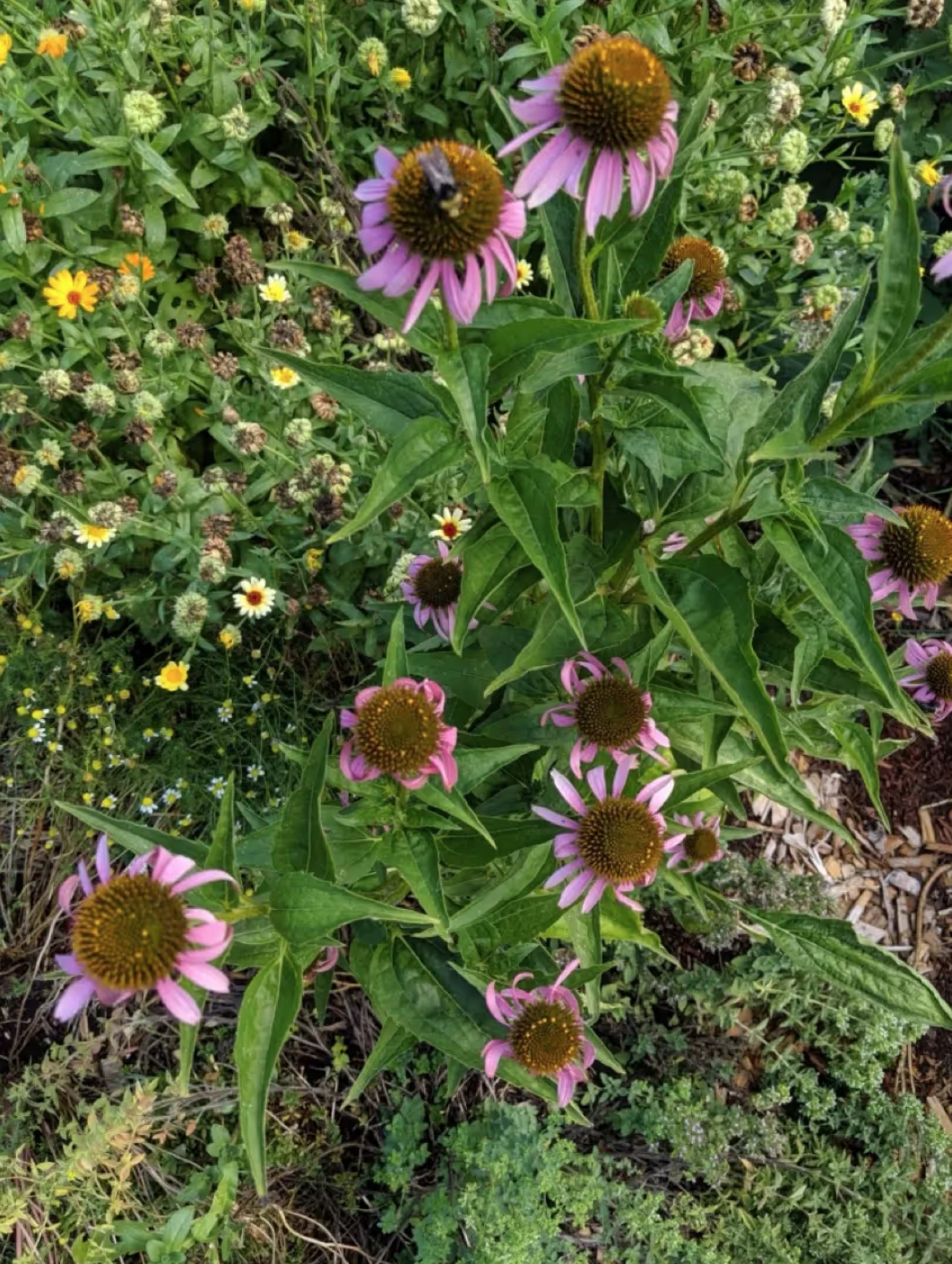
Now, as I visit my echinacea patch, I often find bees sleeping on the spiky pad of the center cone or gathering pollen with their heavy knees. A few echinacea cut and arranged into a bouquet brighten my kitchen and remind me of how a seed moistened in a paper towel in February transformed into something that benefits the ecosystem of my backyard in the heat of today’s summer.
Growing Purple Coneflower from Seed: Tips + Tricks
Preparing Coneflower Seeds for Planting
Can I just scatter coneflower seeds?
Yes, you can scatter coneflower seeds directly onto the soil surface, but this will need to be done in the fall or early winter. This mimics their natural propagation. However, germination rates can be spotty in this way, as wildlife and other environmental factors can dislodge your seeds.
If you’re just starting out, sowing them indoors in seed trays might give you better results. I’ve tried both methods and found that scattering seeds didn’t work well for me, possibly due to fall rains washing them away.
What month is best to plant coneflowers?
The best time to start coneflower seeds with a high success rate is in January or February. This is when you would begin the cold stratification process.
Sun or shade?
Full sun for these beauties! I planted mine in a sunny spot, and they bloomed vigorously in their second year.
Are coneflowers easy to start from seed?
Yes, but they require some patience and you'll have a higher success rate with proper conditions like cold stratification. Once those needs are met, they’re relatively easy to grow from seed.
Germination and Growth
How long does it take to grow purple coneflower from seed?
- Cold Stratification: 3-4 weeks
- Germination: 7-21 days
- Time to maturity (first bloom): 2 growing seasons
Will purple coneflower bloom the first year?
Typically, no. Purple coneflowers usually focus on root development in their first year and will start blooming in their second season. If you want to try to get your plants to bloom in their first year, try sowing seed outdoors in the fall, and then go through mimicking the cold stratification process in the fridge with another batch of seeds in early January, and sow them in seed cells indoors in late January. They should sprout sometime in February. Tend to them indoors until your last frost has passed. Neither of these methods will guarantee you first year blooms, but the earlier in the year that they germinate and get established, the higher your chances are.
Honestly though, I just like to let the plants take their time and not ask them to rush.
Lifecycle and Maintenance
Will coneflowers reseed themselves?
Yes! Coneflowers are prolific self-seeders. If you allow the seed heads to remain on the plants, you’ll likely find new plants emerging the following season. One thing to be mindful of is that birds may eat so many of the seeds that you don’t experience the self-sowing tendency of this plant.
How many years do coneflowers live?
Coneflowers are perennials and can live for many years. According to a recent poll, gardeners often see the same plant return 3-5 years or more. They’ll keep coming back year after year, adding beauty to your garden.
According to Plant Delights, you can extend the lifespan of your coneflower plant by dividing the plant cluster that they form every 4 years. In the wild, echinacea plants can live for 40 years!
Do you cut back coneflowers in the fall?
In years where your plant blooms you can cut them back. Howver, I tend to let them do their thing as they would in nature. I'm not one to care much about a tidy looking garden.
How long before purple coneflower actually blooms?
Expect your coneflower to bloom in its second year of growth. In the first year, it focuses on root and foliage development.
Why is my purple coneflower missing a flower stalk?
It’s common for coneflowers to lack flower stalks in their first year. They’re busy establishing a strong root system and basal leaves. Blooms will appear in the second year.
Why is my coneflower not looking its best?
According to the USDA, echinacea does not do well in water-logged soils, or soil where there is a lot of competition with weeds. Keep the area free of weeds by placing a heavy mulch around the plants, and add some small rocks or pebbles to the soil to help with drainage.
Ecological and Medicinal Benefits
Benefits of purple coneflower in the ecosystem:
Purple coneflowers are fantastic for the ecosystem. They attract pollinators like bees and butterflies, and their seed heads provide food for birds in the fall and winter.
What part of echinacea is used for medicine?
The roots, leaves, and flowers of echinacea are used for medicinal purposes. Check with your doctor before working with echinacea in any way, as allergic reactions, interactions with medications, and complications with pregnancy and breastfeeding can occur.
Hybrid Forms vs Wild Type
Friends, I understand that the hybrid kinds of echinacea are really enticing. The range of colors! The zinnea-like center petals! They are a delight for sure. If you do plant these hybrids, be sure to also plant some of the heirloom varieties.
Here's what Xerces Society says about echinacea hybrids:
“Many of these cultivars are sterile and have no benefit to pollinators. Others have flower structures so complex a pollinator couldn’t find its way to the center with a map, a compass, and a native guide.
More troubling, cultivars often have reduced nutritional benefits, and haven’t been well-enough studied to identify those which may be harming pollinators in that regard.”
As Edge of the Woods states, it should also be noted that the hybrids may "lack vigor and die in harsh winters" unlike the wild-type species which are pretty hardy across the continental US.
| Aspect | Hybrids | Wild Types |
|---|---|---|
| Pollinator Support | Often less beneficial, complex flower structures | Highly beneficial, simple structures accessible to pollinators |
| Vigor and Resilience | May lack vigor, susceptible to harsh conditions | Resilient, well-adapted to local climates |
| Aesthetic Variety | Wide range of colors and forms, including double flowers | Traditional, reliable beauty |
| Sterility | Many hybrids are sterile, do not reseed | Prolific self-seeders |
| Nutritional Benefits | Reduced nutritional value for pollinators | Rich in nectar and pollen, beneficial for wildlife |
| Lifespan | Often shorter-lived | Can live for many years, up to 40 years in the wild |
| Market Availability | Readily available in garden centers | May require sourcing from specialized native plant nurseries |
Xerces Society, Edge of the Woods
Here’s a guide to how purple coneflower benefits the ecosystem:
| Beneficial Insect/Wildlife | Type | Notes |
|---|---|---|
| Silvery checkerspot butterfly | Butterfly | Larval host |
| Monarchs | Butterfly | |
| Painted Ladies | Butterfly | |
| Metallic green sweat bee | Bee | |
| Sulfurs and whites | Butterfly | |
| Swallowtails | Butterfly | |
| Fritillaries | Butterfly | Nectar |
| Honeybees | Bee | |
| Bumblebees | Bee | |
| Digger bees | Bee | |
| Leaf-cutting bees | Bee | |
| Carpenter bees | Bee | |
| Cuckoo bees | Bee | |
| Hoverflies | Fly | |
| Native bees | Bee | Nectar and pollen |
| Hummingbirds | Bird | Nectar |
| Wavy-lined Emerald (Synchlora aerata) larvae | Moth Larvae |
PSU, American Meadows, Edge of the Woods, Prairie Road Organic, NC State Extension, First Light Wildlife Habitats,
Native Perennial Drought-Tolerant Wildflower for Pollinators - What's Not to Love About Echinacea?
Some final thoughts on echinacea: This plant really has a lot going for it.
✓ It's incredibly drought-resistant, which makes it a great choice if you’re dealing with dry conditions or want to set up a low-water garden.
✓ Its ability to attract pollinators is a boon for your backyard. Bees, butterflies, and other beneficial insects seem to love it, and that’s great news for the health of your entire garden.
✓ The flowers are a real showstopper too. With their vibrant colors, they can add a lot of visual interest and beauty to your space.
✓ If you’re new to gardening, you’ll be happy to know that echinacea is pretty easy to grow and maintain. It’s a friendly plant for beginners.
✓ It’s a perennial. So once you plant it, you’ll get to enjoy it year after year without needing to replant, which is both time-saving and cost-effective.
All in all, echinacea is a fantastic addition to any garden, offering beauty, resilience, and ecological benefits with minimal fuss.
FAQ
How can I overwinter my coneflowers?
Purple coneflowers are generally hardy and can overwinter outdoors. Mulch the base of the plants to protect them from severe cold.
Can I grow coneflowers in containers?
Yes, coneflowers can be grown in large containers. Ensure the container has good drainage and use a high-quality potting mix.
How do I propagate coneflowers?
Besides seed propagation, you can also divide mature plants in the spring or fall.
What's the best way to harvest and store echinacea for medicinal use?
Harvest roots in the fall of the plant's second or third year. Clean and dry them thoroughly before storing in a cool, dark place.
Do coneflowers need fertilizer?
Coneflowers are not heavy feeders. An application of compost or a balanced, slow-release fertilizer in the spring should suffice.